

Farm irrigation often looks simple from the outside: open the valve, let the water run, then close the valve.
In real farm work, it is not that simple.
Fields may be far apart. Irrigation may need to start early in the morning or late at night. Different crops may need different watering times. During busy seasons, opening and closing valves manually can waste hours every week.
An automatic irrigation valve helps solve this problem by controlling water flow without constant manual operation.
An automatic irrigation valve is a valve that can open and close based on a timer, controller, remote command, or smart irrigation system.
It can be used for:
scheduled irrigation
remote valve control
zone irrigation
drip irrigation
sprinkler irrigation
farm water management
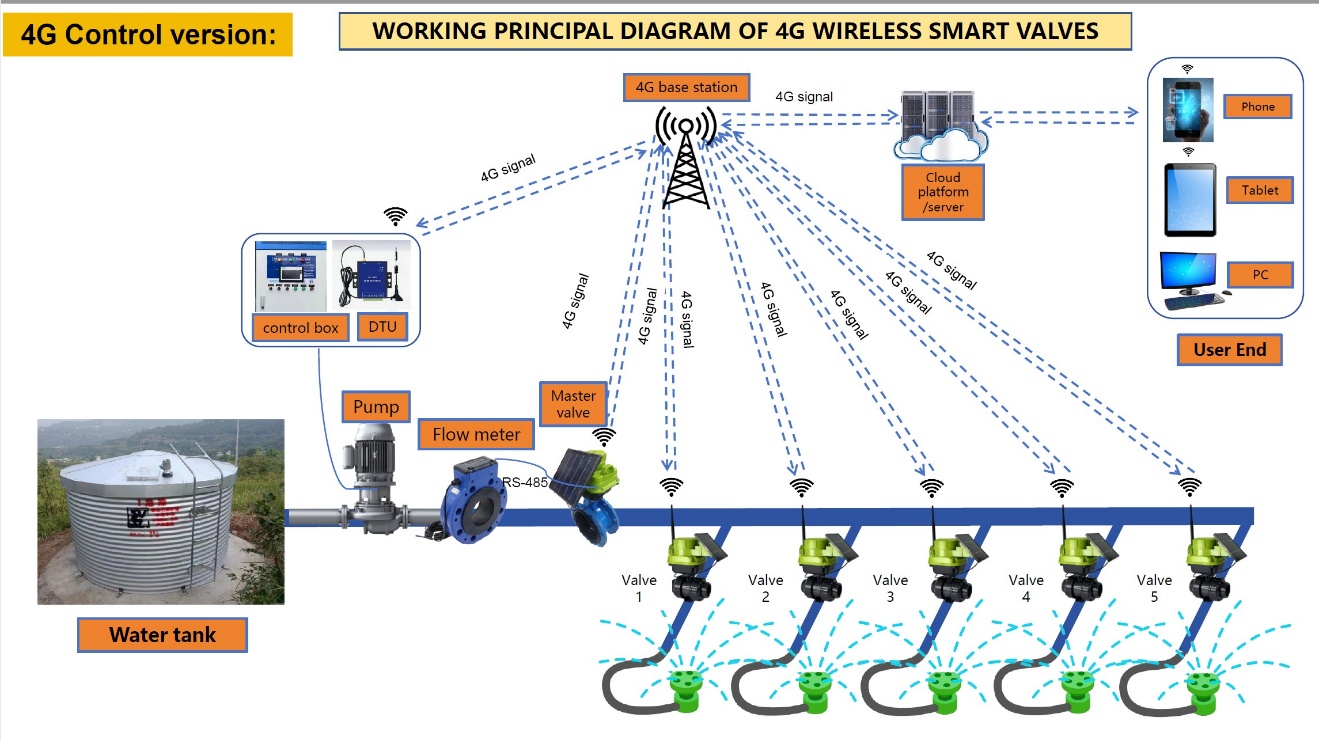
Some automatic irrigation valves are simple timer-based products. Others are smart valves with wireless communication such as LoRaWAN, 4G, cellular, or IoT platform control.
pic.1 Automated irrigation system
The biggest benefit is labor saving.
Instead of sending workers to each valve, the farm can schedule or remotely control irrigation zones. This is especially useful when:
there are many valves across the farm
the field is far from the house or office
irrigation happens at inconvenient times
different crop areas need different schedules
water needs to be controlled more carefully
Automatic control also helps reduce mistakes. A valve left open too long can waste water, damage crops, or increase pumping cost. A valve closed too early can cause uneven irrigation.
A typical automatic irrigation setup includes:
irrigation valve
valve controller or actuator
power supply
control signal or wireless communication
app, timer, or cloud platform
The farmer sets the irrigation schedule or sends a remote command. The controller opens or closes the valve. In a more advanced system, the valve can be part of a larger irrigation network with several zones.
For example, a farm may irrigate Zone 1 from 6:00 to 6:30, Zone 2 from 6:30 to 7:00, and Zone 3 from 7:00 to 7:30. The system can do this automatically without someone walking to each valve.
Traditional automatic irrigation systems often use wired controllers. They can work well in gardens or smaller sites, but wiring becomes expensive in large farmland.
Wireless automatic irrigation valves are more flexible for farms.
LoRaWAN valves are good for large areas with many valves and low-power requirements.
4G or cellular valves are good for remote standalone points where a gateway is not available.
Solar-powered valves are useful when there is no stable power supply in the field.
The choice depends on distance, power, number of valves, and the farm's network conditions.
Automatic irrigation valves are suitable for:
vegetable farms
orchards
vineyards
greenhouses
drip irrigation systems
sprinkler irrigation
remote farmland
large landscape irrigation
They are especially useful when irrigation is divided into zones. Zone control allows the farm to water different areas based on crop type, soil condition, or water availability.
Before installing automatic irrigation valves, check:
pipe size and valve type
water pressure
power supply
wireless signal coverage
waterproof protection
manual override
control distance
maintenance access
compatibility with existing irrigation system
A good automatic irrigation valve should still allow manual operation when needed. Farms need automation, but they also need backup control when the weather, power, or network changes.
An automatic irrigation valve is not only about modern technology. It is about making irrigation easier, more reliable, and less dependent on manual labor.
For farms that manage multiple irrigation zones, automatic valves can save time, reduce water waste, and make daily irrigation work much easier.