
Remote farmland is not an easy place for automation.
Power is limited. Mobile signal can be weak. Running cables across fields is expensive, and once the rainy season starts, maintenance becomes even harder. For many growers, this is why irrigation is still done manually, even when the farm already needs better water control.
A LoRaWAN smart irrigation valve is built for exactly this kind of environment. It gives farmers a way to open, close, and schedule irrigation valves over long distances without laying control cables across the field.
LoRaWAN is an open and popular IoT network for long-range smart irrigation.
LoRaWAN is designed for long-range, low-power communication. That matters in agriculture because the devices are often spread across large areas instead of sitting inside one building.
For a farm, orchard, greenhouse area, or remote irrigation zone, LoRaWAN can help solve several practical problems:
valves are far away from the pump station
wiring is too costly or difficult
battery life matters
solar power is preferred
the field needs many valves but only a small amount of data
the farmer wants remote control without visiting every valve manually
Unlike Wi-Fi, LoRaWAN does not need a router near every valve. Unlike traditional wired control, it does not require long cable trenches. A properly placed gateway can cover a wide area and connect many smart irrigation valves.
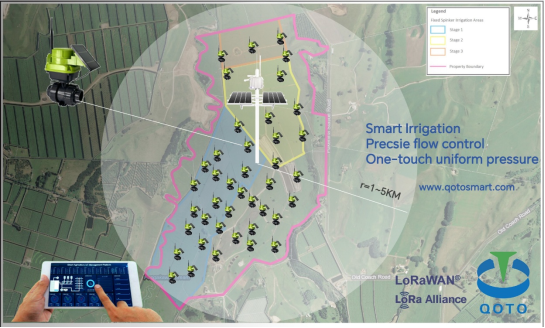
LoRaWAN is reliable for long-range, low-power field communication.
A LoRaWAN smart irrigation valve connects the irrigation valve with an IoT control network. Depending on the system design, the farmer or irrigation manager can:
open or close valves remotely
set irrigation schedules
group valves by field or crop area
check valve status
reduce manual inspection
receive fault reports such as water shortage, low power, abnormal pressure, or motor block
control irrigation from a phone or cloud platform
This is especially useful when fields are scattered or when irrigation needs to happen early in the morning, late at night, or during hot weather when manual operation is inconvenient.
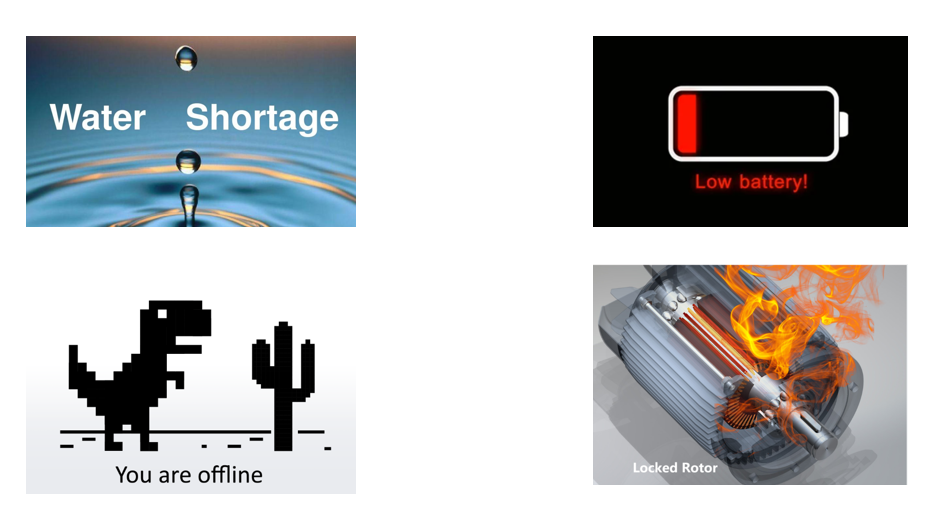
Status monitoring and alarms can be reported through 4G or LoRaWAN networks.
LoRaWAN irrigation valves are a good fit for:
farmland irrigation
orchards
vineyards
greenhouses
remote pump stations
drip irrigation zones
large landscape irrigation
farms where wiring is difficult
The main advantage is not only “smart control”. It is reducing the physical work of checking and operating valves across a large site.
Both can work well, but they fit different situations.
LoRaWAN is often better when there are many valves in one farm area. One gateway can connect many devices, and each valve can run with low power consumption.
4G or cellular control can be better when the valve is far away from other equipment, or when the project does not want to install a gateway. A cellular irrigation valve connects directly through the mobile network.
In simple terms:
choose LoRaWAN when many valves are deployed across one farm
choose 4G or cellular when each valve needs independent network access
choose solar power when there is no stable power supply in the field
Many farms can also use a mixed system, with LoRaWAN for dense valve areas and cellular control for isolated points.
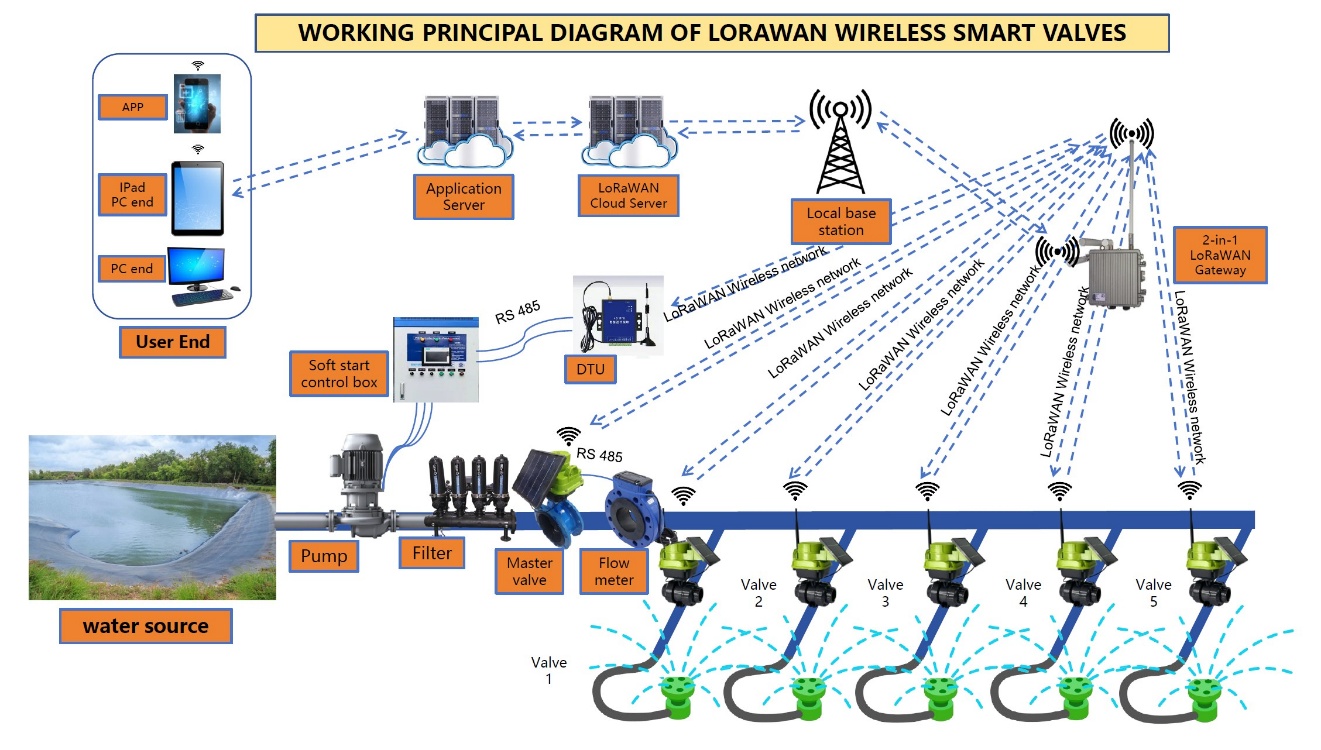
LoRaWAN topology for smart irrigation valve networks.
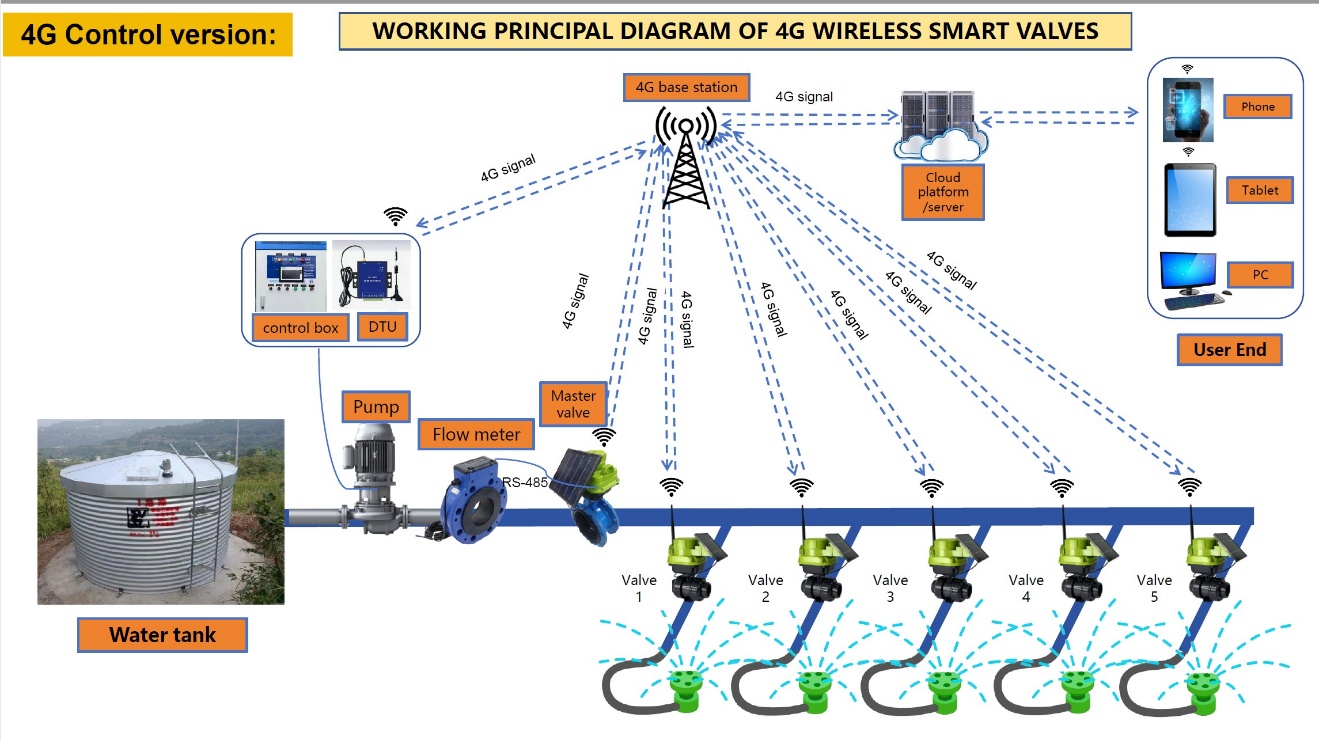
4G topology for remote irrigation valve control.
Before buying a LoRaWAN irrigation valve, farmers and project managers should check:
communication distance in real field conditions
battery or solar power options
valve size and pipe connection
waterproof rating
manual override function
platform or app control
whether the system supports grouping and scheduling
local LoRaWAN gateway coverage
whether optional sensors or flow meter data are needed
A good smart irrigation valve should not only connect to the network. It should also survive outdoor conditions, handle water pressure, and remain easy to maintain.
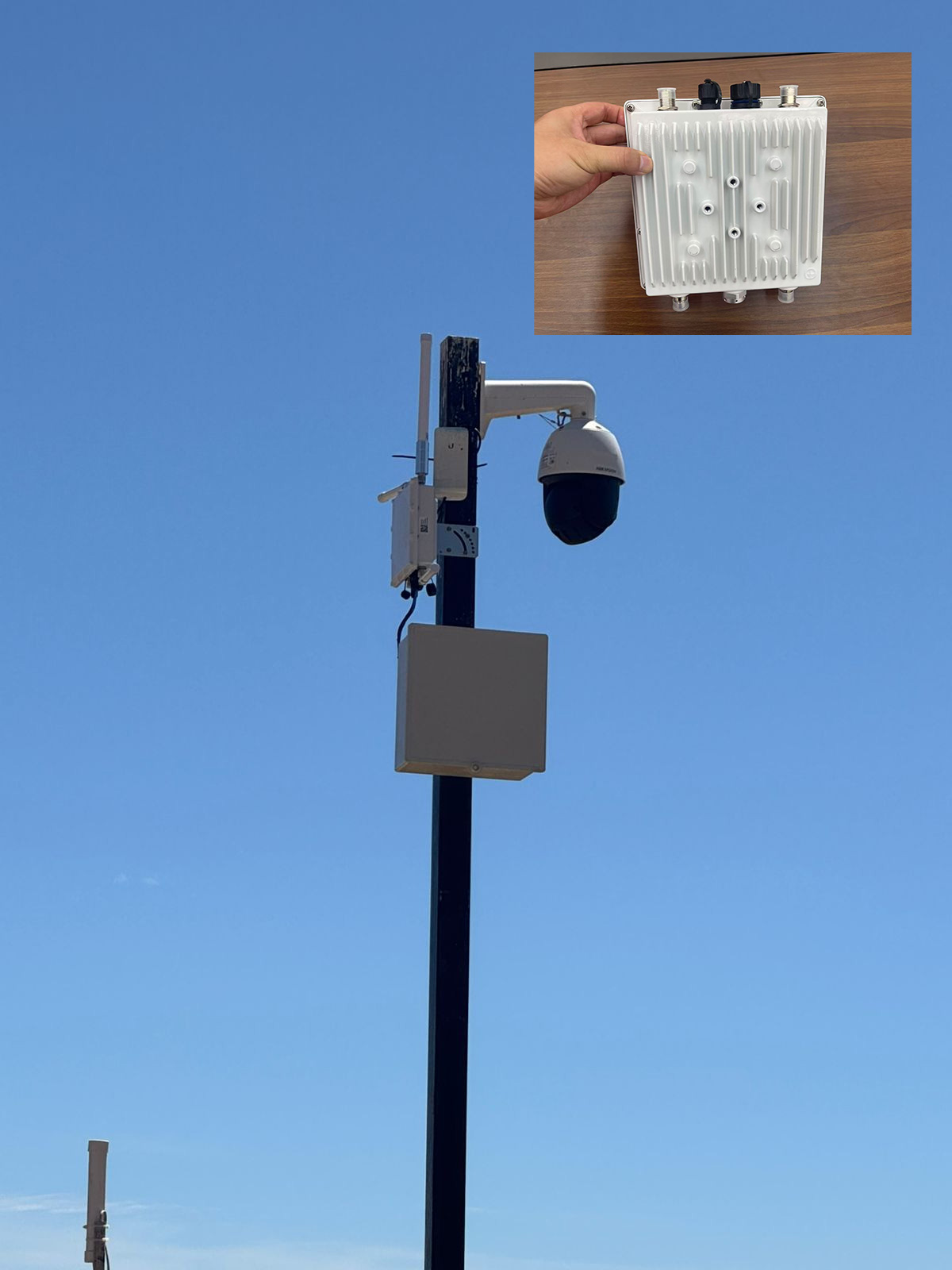
Remote irrigation valve control helps reduce field labor in large agricultural sites.
For remote farmland, the best irrigation system is not always the most complicated one. It is the one that saves labor, reduces wiring, and keeps water under control when the field is far from the operator.
A LoRaWAN smart irrigation valve gives growers a practical way to bring IoT control into large agricultural sites without turning the farm into a wiring project.