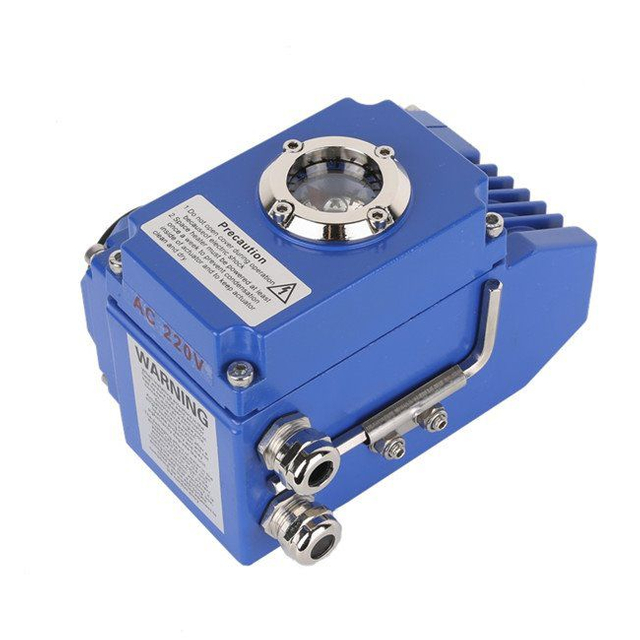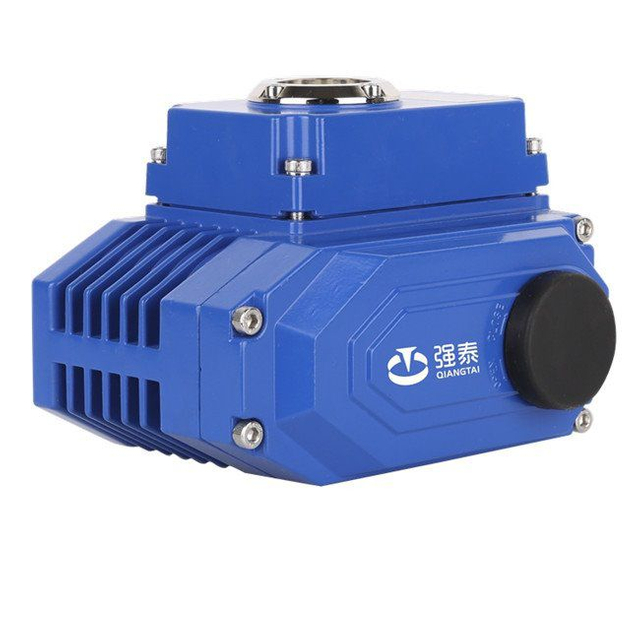

Electric actuators are essential components in modern technology, serving as the driving force behind various mechanical movements. These devices convert electrical energy into mechanical motion, either linear or rotary, to automate and control a wide range of processes. Here, we explore the fundamental aspects of electric actuators, their operation, types, advantages, and diverse applications.
An electric actuator is a device that uses electrical energy to create mechanical movement. Its primary purpose is to control or drive mechanical systems with precision and efficiency. Electric actuators are widely used to automate processes, enhancing productivity and reducing manual intervention in various industries.
The key components of an electric actuator include:

· Electric Motor: Generates rotary motion.
· Drive Shaft and Helical Screw: Transfer the rotary motion.
· Ball Screw Nut or Lead Screw: Converts rotary motion into linear motion.
· Piston Rod: Applies the linear force generated by the motor.
· Feedback Systems: Monitor and control the actuator's position.
Recent advancements in electric actuator technology have focused on increasing efficiency and integration with modern process controllers. Innovations have improved their alignment with automation standards and enhanced their failsafe capabilities, ensuring continued operation even during power interruptions.
Electric actuators play a crucial role in industrial operations by automating mechanical tasks. They are integral to controlling valves, dampers, and various other systems, thereby increasing efficiency and precision in manufacturing, processing, and other industrial activities.
Electric motors are at the heart of electric actuators, generating the necessary force for movement. By converting electrical energy into mechanical force, these motors drive the actuator's components to perform specific tasks, from moving parts in machinery to controlling complex systems.
Electric actuators operate by converting electrical energy into mechanical motion. The process begins with an electric motor generating rotary motion. This rotary motion is transferred through a drive shaft and helical screw to a ball screw nut, which converts it into linear motion. The piston rod then applies this linear force to achieve the desired movement.
Electric actuators often incorporate feedback systems to ensure precise control. These systems monitor the actuator’s position and adjust its movements as needed. Preprogramming allows the actuator to follow specific position sequences, enhancing accuracy and reliability in various applications.

· Mechanism: Utilizes a plain screw or nut arrangement to convert rotary motion into linear motion.
· Application: Commonly used in manual lifts and agricultural equipment.
· Advantages: Known for safety and low cost.
· Disadvantages: Less powerful and efficient compared to other types.

· Mechanism: Features a nut with recirculating ball bearings and a ground screw thread, providing high efficiency and precision.
· Application: Ideal for medical assemblies and machining tools.
· Advantages: Offers high efficiency and precise control.
· Combination with Motors: Often paired with stepper or servo motors for rapid and accurate action sequences.
Electric actuators are generally less expensive than hydraulic and pneumatic systems. Their simpler design and the lack of additional control systems contribute to their cost-effectiveness.
These actuators are highly customizable to meet specific requirements, including adjustments to motor voltage, stroke length, and force. This flexibility makes them suitable for a wide range of applications.
Electric actuators offer greater mobility compared to hydraulic and pneumatic systems. They only require an electrical power source, making them easier to integrate and relocate within various operational environments.
Electric actuators find applications across numerous industries:
Aerospace: For controlling flight surfaces and landing gear.
Automotive: In functions such as seat adjustments and throttle control.
Clean Energy: In optimizing solar panel and wind turbine positions.
Defense: For missile guidance systems and automated weaponry.
Factory Automation: Driving assembly lines and robotic arms.
Food Processing: Automating mixing, packaging, and quality control.
Industrial Vehicles: Managing steering and lifting functions.
Machine Tools: Ensuring precise movements for cutting and shaping.
Marine: Controlling ballast systems and hatch covers.
Material Handling: Automating the movement and sorting of goods.
Packaging: Driving packaging machinery for accurate filling and labeling.
Pharmaceutical: Automating dosing, packaging, and quality control.
Printing: Managing paper movement and printing press operations.
In summary, electric actuators are versatile and essential components that enhance automation and control in a wide range of industrial applications. Their ability to convert electrical energy into precise mechanical motion makes them integral to modern technology and efficient operations across various sectors.
If you are looking for irrigation valve automation, electric actuators is the answer. More and more farmers and landscape managers they are switching to smart irrigation system, because water saving become very important nowadays.
What actuator for farm irrigation?
For farmland irrigation, you usually need actuator that can work with big valve size - DN50 to DN200 or even bigger. The force needed is between 50N to 500N depending on your pipe diameter. Electric actuator with motor drive is most popular choice, because it can be controlled remotely and work with timer or sensor.
The good thing about electric actuator is you can connect it to your phone or computer. No need to go to field to open or close valve. This save lots of time, especially for big farm.
Solar powered smart valve is getting popular
Many irrigation projects now use solar powered electric actuator. This is very useful for remote area where electricity is not available. The solar panel charge battery in daytime, and actuator work at night or when needed. Some system can last 2-3 weeks without sun charging.
QOTO smart irrigation valve come with this feature. Their solar-powered version can work with LoRaWAN or 4G, you can control from anywhere in the world using phone app. Very convenient for agriculture project.
Application scenarios
Greenhouse automation - control watering by schedule
Farmland irrigation - use soil moisture sensor to auto start
Golf course - different zone need different watering time
Municipal green belt - smart water saving system
If you need help for selecting right actuator for your irrigation project, feel free to contact us.